
“I’m tired.”
Everybody knows what that means. Late night. Busy day. Didn’t sleep particularly well. Could quite happily put your feet up for an hour.
When I say I’m fatigued, I don’t think most people really understand what I mean. I’m not sure I did ‘before FSHD’, because fatigue isn’t simply being more tired. It’s something I’ve had to learn to understand.
Increasingly, I’m realising that living with it isn’t just about learning when to stop. It’s about learning what’s worth carrying on for.
There is more than one kind of tired
I’ve come to recognise different sorts of fatigue.
Sometimes I’m sleepy. That can come with mental sluggishness. My thinking slows down. Concentrating becomes harder. Everything seems to require a little more effort.
At its worst, sleep isn’t optional. I simply can’t stay awake. I have to sleep.
Then there’s another kind of tiredness that I tend to think of as “body tired.” I’m not necessarily sleepy. My body just feels heavy. Empty of fuel.
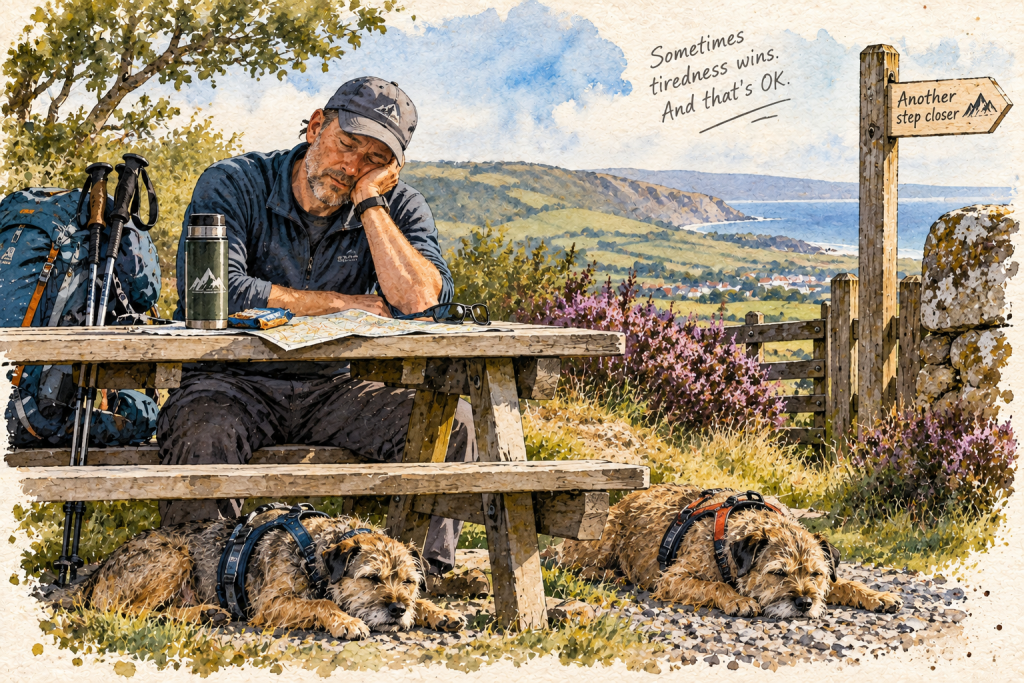
Moving takes more effort. Trying to exert myself can feel like swimming against a current. Sometimes there’s an obvious reason. I’ve walked a long way or done something physically demanding.
Sometimes I’ve done something that wouldn’t make most people remotely tired. Sometimes it seems to happen just because.
I can borrow from tomorrow
The strange thing is, I can often keep going. And I do. If there’s something I really want to do, I can push through the fatigue.
That doesn’t mean the fatigue has gone away. I’ve come to think of it as creating a deficit. I’m borrowing energy that I don’t really have.
Eventually the debt needs paying back. Sometimes that means sleep, but sleep and recovery aren’t necessarily the same thing. I can have plenty of sleep and still feel as though my body hasn’t restored itself. I’m not sleepy anymore.
My body still needs to rest.
That can be frustrating, because while my body might want to sit still, the rest of me doesn’t necessarily agree. I get fidgety. Restless. I want to get on with something. Sometimes I genuinely don’t know what my body wants from me.
Rest isn’t always the answer
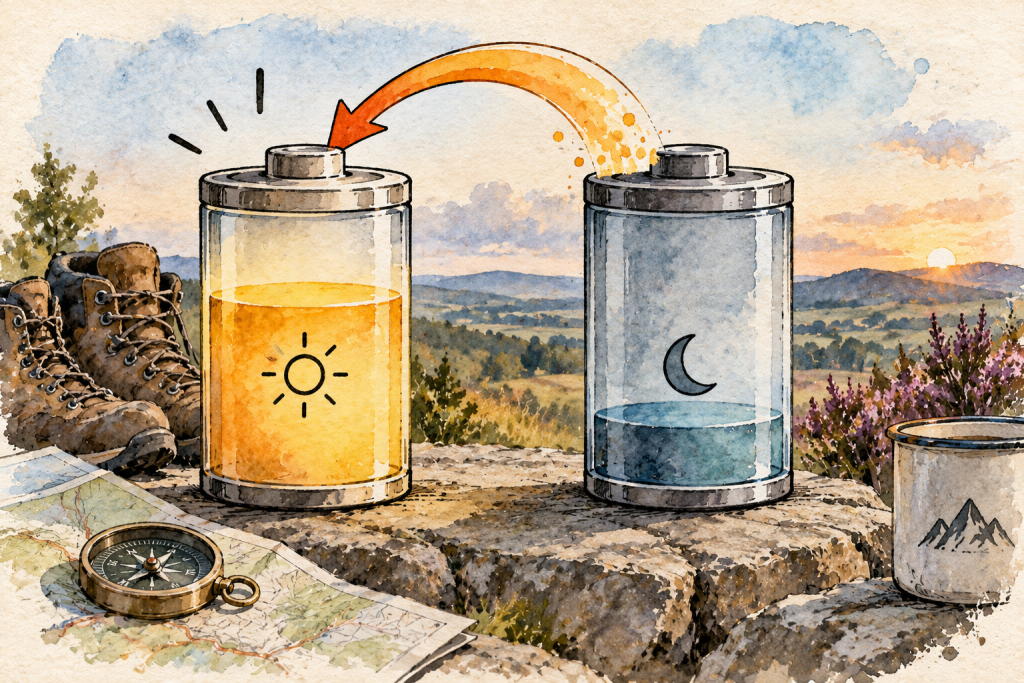
You’d think the obvious response to fatigue would be to do less. I’ve discovered it’s not quite that simple. If I do absolutely nothing, getting going again can be harder. I’ve been learning this while walking the Cleveland Way.
Before one of my walking days, I want to be rested. But I’ve also found that doing something the previous day can leave me better prepared than doing nothing at all. Of course, doing something can hurt.
So I can almost expect to start a day’s walking with some degree of pain. That’s become part of the calculation. A little activity might mean a little pain. A lot might mean a lot.
Except sometimes a little means a lot. And sometimes the bill arrives the following day. It depends.
On what? I haven’t got a clue.
That’s why I don’t think there is a perfect formula for managing this. I’m learning about my body, but occasionally it seems to change the rules.
Fatigue doesn’t stop at my muscles
There’s another part of this that I find much harder to talk about. When I become mentally tired, I become emotionally tired too.
Initially, I tend to become quiet. Conversation takes effort. Thinking takes effort. Sometimes engaging with what’s happening around me takes effort.
Sometimes that quietness turns into irritability. I usually recognise it happening. Unfortunately, sometimes I recognise it too late.
Hayley sees this part of fatigue more than anybody. I can sense her disappointment when it boils over. Not disappointment in me, exactly. More that this isn’t what she wants for me, or for her. It isn’t what either of us wants.
Fatigue might help explain the irritability, but it doesn’t make it pleasant for the person living alongside it. That’s something I’m still learning to manage. The energy I have isn’t only needed for walking up hills.
I need some left for the people who matter too.
Most people wouldn’t know
Most people who meet me probably wouldn’t know I have muscular dystrophy.
If you know what you’re looking for, you might notice my scapular winging, dropped shoulders, thinning arms or legs, or some of the ways I move. Generally, if I don’t tell somebody I have FSHD, they probably don’t know.
Sometimes that’s exactly how I want it, but it creates a strange problem. If somebody sees me struggling with something that shouldn’t be difficult, they see the struggle without knowing the reason.
I’m quite self-conscious, so I sometimes find myself wondering what they’re thinking. And there’s another thing they can’t see. The cost.
You see what I did
You might see me walk 10 kilometres. You don’t see what I did the day before to prepare for it. You don’t see the calculation about how much energy I have available.
You don’t necessarily see the fatigue building or the pain that comes with it. And you probably won’t see what happens afterwards.
You just see that I did it.
That’s one of the strange things about a condition that, for me at least, can remain largely invisible. Managing fatigue isn’t simply about deciding whether I’m physically capable of doing something.
Increasingly, it’s also about deciding whether something is worth what it might cost me. And that sounds rather negative. I don’t think it is.
Some things are worth the cost
I know walking the Cleveland Way will cost me. I’ll get tired. I’ll hurt. Some days I’ll feel surprisingly good. On others, something that shouldn’t be particularly difficult will knock me sideways.
There will be days when I have to repay some of the energy I’ve borrowed. I could avoid quite a lot of that by not doing it.
But then I wouldn’t be walking the Cleveland Way.
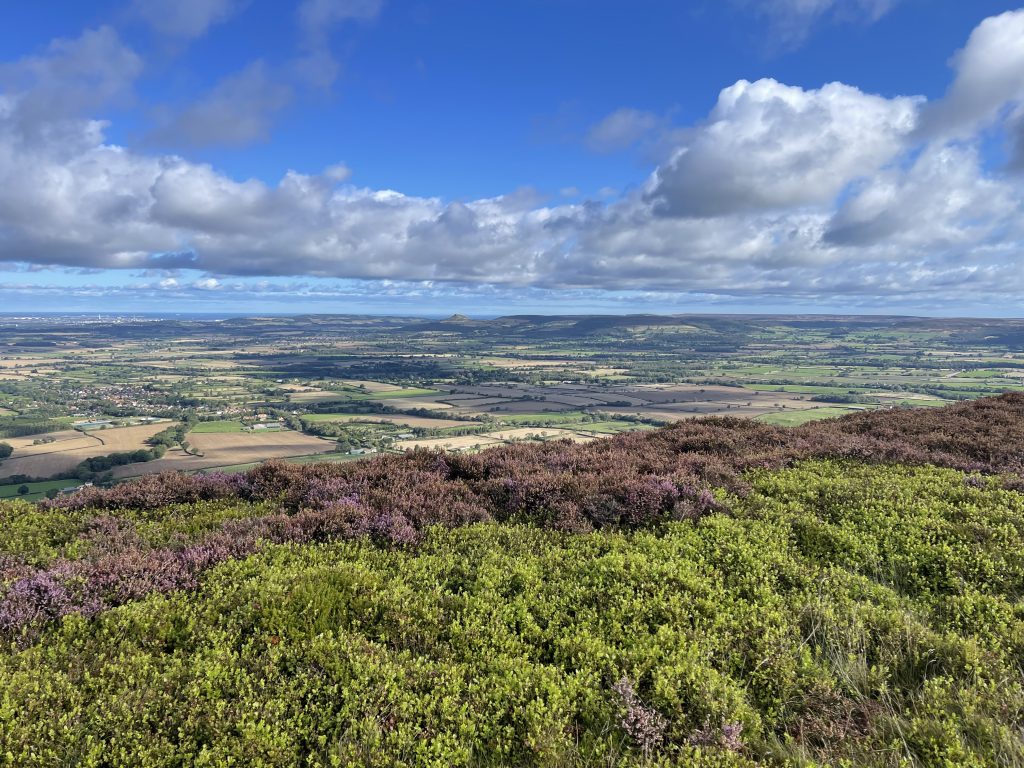
And I bloody love walking. That’s the bit I don’t want fatigue to take away from me.
So perhaps I’m not trying to learn how to conserve every bit of energy I have. I’m trying to get better at deciding where I want to spend it.
Sometimes the right decision will be to stop. Sometimes it will be to sleep. Sometimes I’ll need to say no to something today because there’s something more important tomorrow.
Sometimes I might knowingly spend more than I’ve got and accept that I’ll have to pay it back, because surely the objective isn’t to reach the end of every day with as much energy as possible still in the tank.
The objective is to spend it on a life I actually want to live.
A note from me
This is my experience of fatigue and FSHD. Other people’s experience may be very different. I’m not a medical professional, and nothing here is intended to replace advice from your own healthcare team.