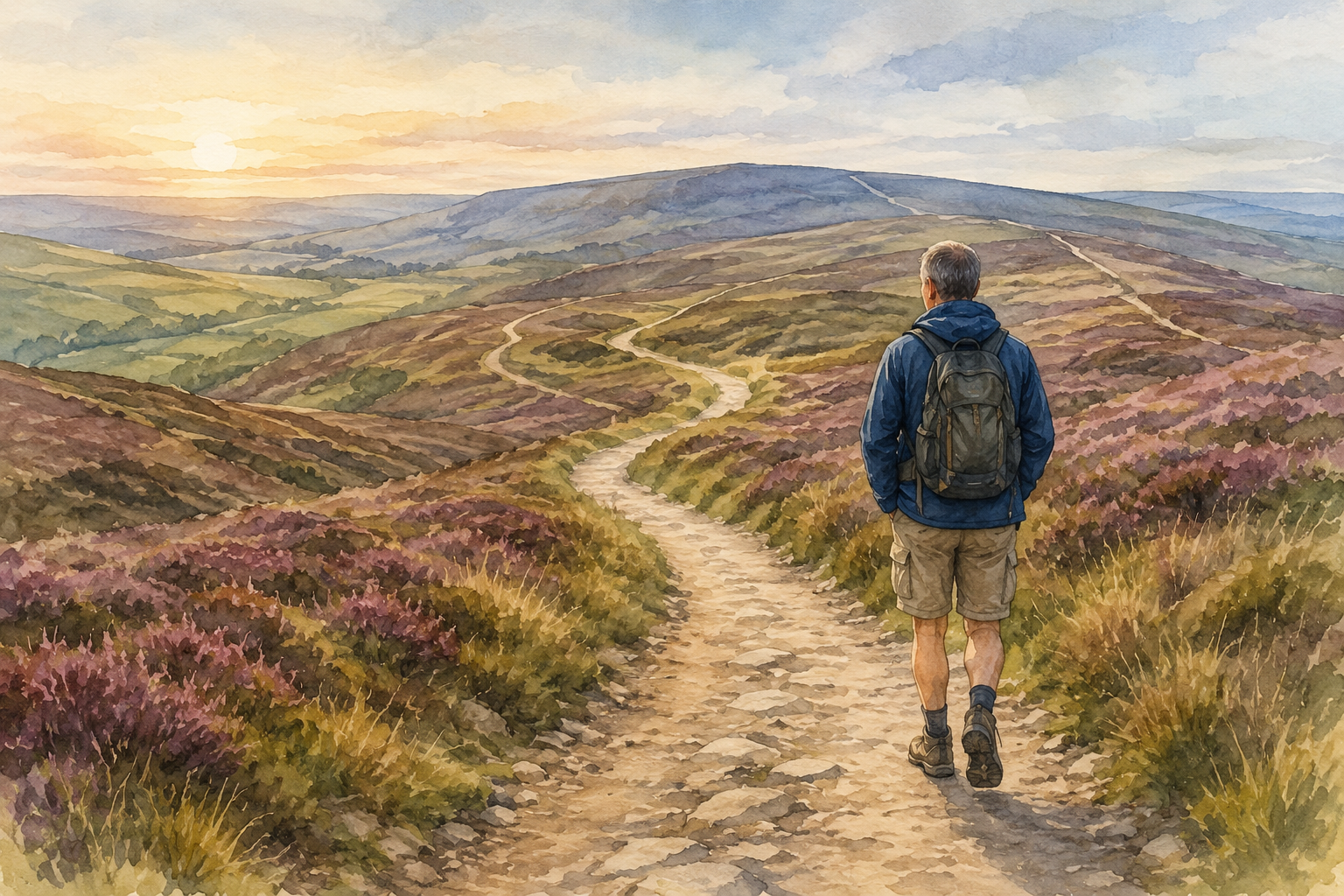
For a long time, I knew there was a possibility that whatever had happened to Dad might eventually happen to me, but I didn’t spend my life worrying about it.
Dad never received a proper diagnosis. We knew he had some form of muscular dystrophy, but we didn’t know what it was, why he had it or what that might mean for me.
So there wasn’t really anything to do with that information. I got on with my life. I worked. I travelled. I ran. Hayley and I walked for miles with the dogs.
And as I got into my forties without anything particularly dramatic happening, I suppose there was a part of me that thought perhaps I’d got away with it. Maybe whatever Dad had wasn’t coming for me after all.
Finally, there it is
When Anne first examined me and suggested that I should have a blood test, I don’t remember some huge moment of realisation. It was much quieter than that.
More like: Finally, there it is.
The thing I’d always known might appear one day had apparently arrived.
I’d seen what had happened to Dad over the years, so of course I knew what my future could look like. That made finding out exactly what was happening incredibly important to me.
I wanted a name for it. Not simply because I needed to know. I wanted to know so that I could do something.
Things had already started to change.
By then, whatever was happening to my muscles had already begun changing my life. Running had been a huge part of it. So had long walks — on my own sometimes, but more often as part of our little pack. I loved being outdoors and being physically active.
Then I was told that until we understood what was happening, I shouldn’t exercise too vigorously or for too long. So I stopped. There were other things too.
We had a lot of outside space to maintain and jobs that I’d previously just got on with were becoming much more physically demanding. I was travelling internationally for work. That should have been exciting and enjoyable, but long-haul flights became uncomfortable and some of the pleasure started disappearing from that too.
And somewhere amongst all of this I got myself into a cycle of eating and drinking too much of the wrong things. I gained weight. That made being physically active more difficult, which didn’t exactly help.
I don’t want to create a long list of things that FSHD took away from me. Looking back now, I’m not even sure that’s the right way to think about it, but at the time, that’s how it felt. This condition was taking things from me.
And I desperately wanted to find a way to start getting some of them back.
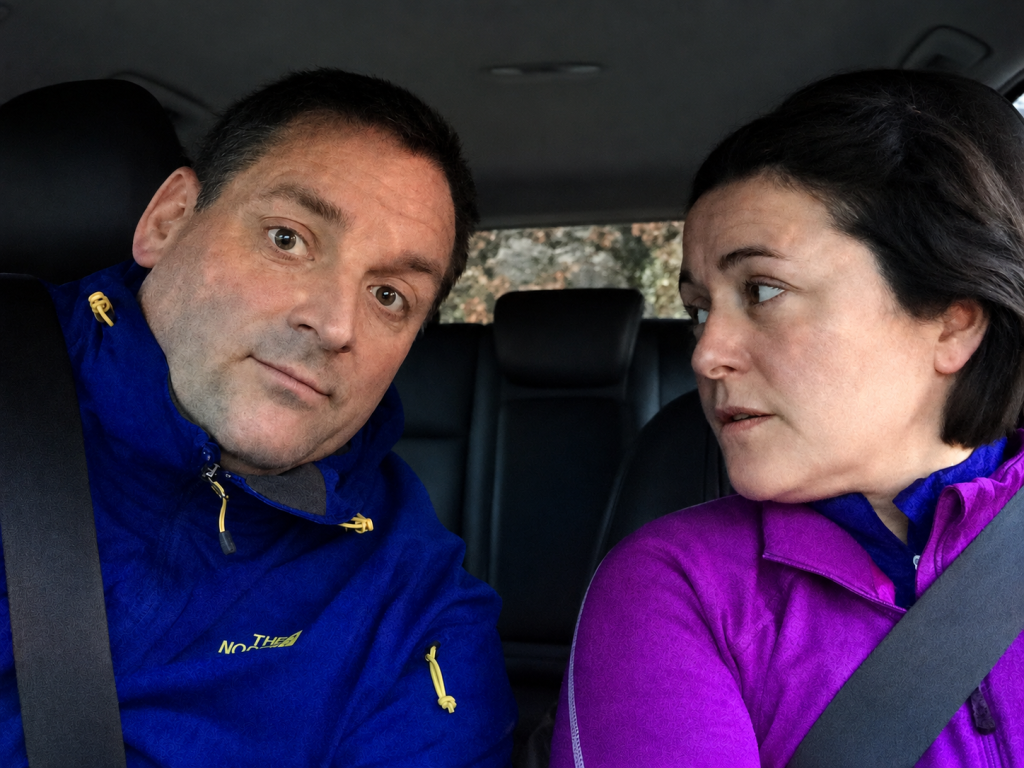
Just tell me what it is
That’s why getting a diagnosis became so important. If somebody could tell us what Dad and I had, then perhaps I could understand it. If I could understand it, perhaps there would be something I could do.
A treatment. A particular type of exercise. Something I should eat. Something I shouldn’t do. Some research I could join. Anything.
Instead, Hayley and I waited. And waited. And waited.
Tests led to other tests. Appointments led to other appointments. Answers seemed to lead mostly to more questions. That went on for more than six years. Looking back, I think life was, to some degree, on hold.
Not completely. We carried on working and living and doing all the normal things people do, but there was always this unresolved question sitting there.
What is wrong with me?
And until somebody could answer it, I didn’t really know what I was supposed to do next.
We think you have FSHD
Eventually, at Newcastle, somebody said the words we’d been waiting all those years to hear.
“We think you have FSHD.”
I was angry. I was angry that it had taken so long to reach a diagnosis that, looking back, I believe we could have reached within months of that first consultation with Anne. The anger was accompanied by something else.
Relief. There was finally an explanation. See, it wasn’t all in my mind. Perhaps more importantly: I wasn’t just being lazy. That’s quite difficult to admit.
When things gradually become harder to do and nobody can tell you why, it’s surprisingly easy to start questioning yourself.
Perhaps I’m just getting older. Perhaps I’m unfit. Perhaps I’ve put too much weight on. Perhaps I’m simply not trying hard enough. A diagnosis doesn’t make the condition disappear, but it does tell you that what you’ve been experiencing is real.
And that mattered enormously.
So what do we do about it?
There was just one rather significant problem with finally finding out that I had FSHD. I started reading about it. I discovered there was no treatment. None.
We’d spent more than six years trying to find the end of this particular road and, practically speaking, it didn’t seem to lead anywhere terribly useful.
That could have been a point at which I decided there wasn’t much point doing anything. It wasn’t. In fact, I think the opposite happened. If there wasn’t yet a treatment for FSHD, then I needed to understand what was within my control.
Taking some control back
These days, that starts with looking after myself. Diet. Exercise. Sleep. Rest. Massage. Supplements. None of those things is a cure for FSHD.
I need to be careful about that distinction. I’m not suggesting that if somebody with FSHD simply eats the right things, takes the right supplements and exercises enough, everything will be fine.
It doesn’t work like that. What they give me is the opportunity to look after the body I’ve got as well as I reasonably can. That’s something I can influence, but there’s another part of taking control that has become increasingly important to me.
Understanding what’s happening next.
I’m a member of the lay research panel at Muscular Dystrophy UK. I work closely with FSHD-UK and get involved as a patient advocate. I regularly visit the John Walton Muscular Dystrophy Research Centre in Newcastle and have developed connections with some of the researchers and medical teams working there. I’ve even found myself supporting their annual FSHD engagement day.
None of that means I can control what happens to my own FSHD, but it means I’m no longer simply waiting for somebody somewhere to find an answer. I’m contributing, in whatever small way I can, to helping us get there. And that feels very different.
What am I frightened of?
I’ve spent some time thinking about this while writing this article. Am I frightened about the future? Perhaps apprehensive is a better word, because I’ve already seen one version of where this condition can go.
Dad eventually lost the use of his legs. Later, he lost the use of his hands. He became completely dependent on Mum. That’s the bit that gets to the heart of it for me.
Walking is important to me. Very important. But this isn’t really about whether I’ll always be able to go for a lovely walk in the countryside. It’s about independence.
Can I get myself to the toilet? Can I wash myself? Can I feed myself? Can I get myself from one place to another?
Those are things most of us barely think about while we’re able to do them. I’ve seen what happens when somebody gradually loses that independence. I’d be lying if I said I wasn’t apprehensive about the possibility of that happening to me.
A different path
But there’s something else I’ve realised while thinking about all of this. For quite a while, I thought FSHD had taken part of my life away from me.
I’m not sure I believe that anymore. What FSHD has actually done is change the path my life is taking and I’m deliberately not going to describe that path as better or worse.
It’s just different. It certainly isn’t the route I would have chosen. But then, how many of us actually end up living precisely the life we’d imagined? There are parts of what happens next that I can influence.
So I’ll look after myself. I’ll keep exercising. I’ll rest when I need to. I’ll stay close to the research. I’ll contribute where I can.
And there are other parts I simply can’t control. I’m learning to live with that too. I don’t know where this path leads. I know where Dad’s led, and I’d be lying if I said that didn’t sometimes make me apprehensive about my own.
My Dad’s journey isn’t a prediction of mine. Neither is anybody else’s. FSHD hasn’t taken my life away. It’s simply changed the path I’m taking. And I’m going to keep walking it.
A note from me
I’m writing this as someone living with FSHD, rather than as a medical professional.
This article is about my own experience of living with the condition and the choices I’ve made along the way. Other people’s experiences of FSHD — and their feelings about living with it — may be very different.